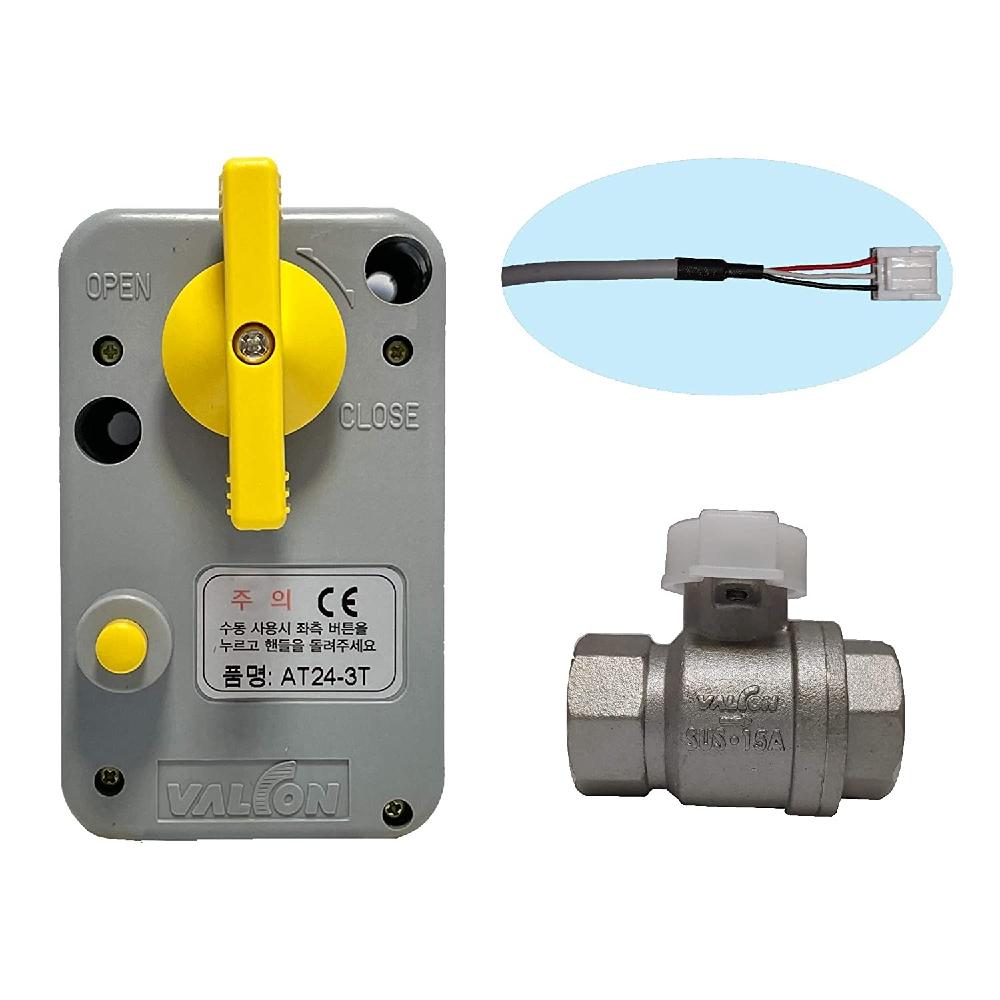
- VALCON is an electric ball valve used instead of a solenoid valve that leaks due to sludge.
- VALCON is an actuator ball valve that can observe the operating state when water is shut off.
- VALCON is a valve that can flow control and direction control with a stronger force than a pneumatic actuator.
- VALCON can be opened and closed types of with a water valve and an air valve.
- VALCON is applied and used in various places such as washing machine, shower, drain, sprinkler, fuel cell, ice maker, control device, heating, irrigation, etc.
Technical Specification
○ 1 Actuator
Model: AT24-3T
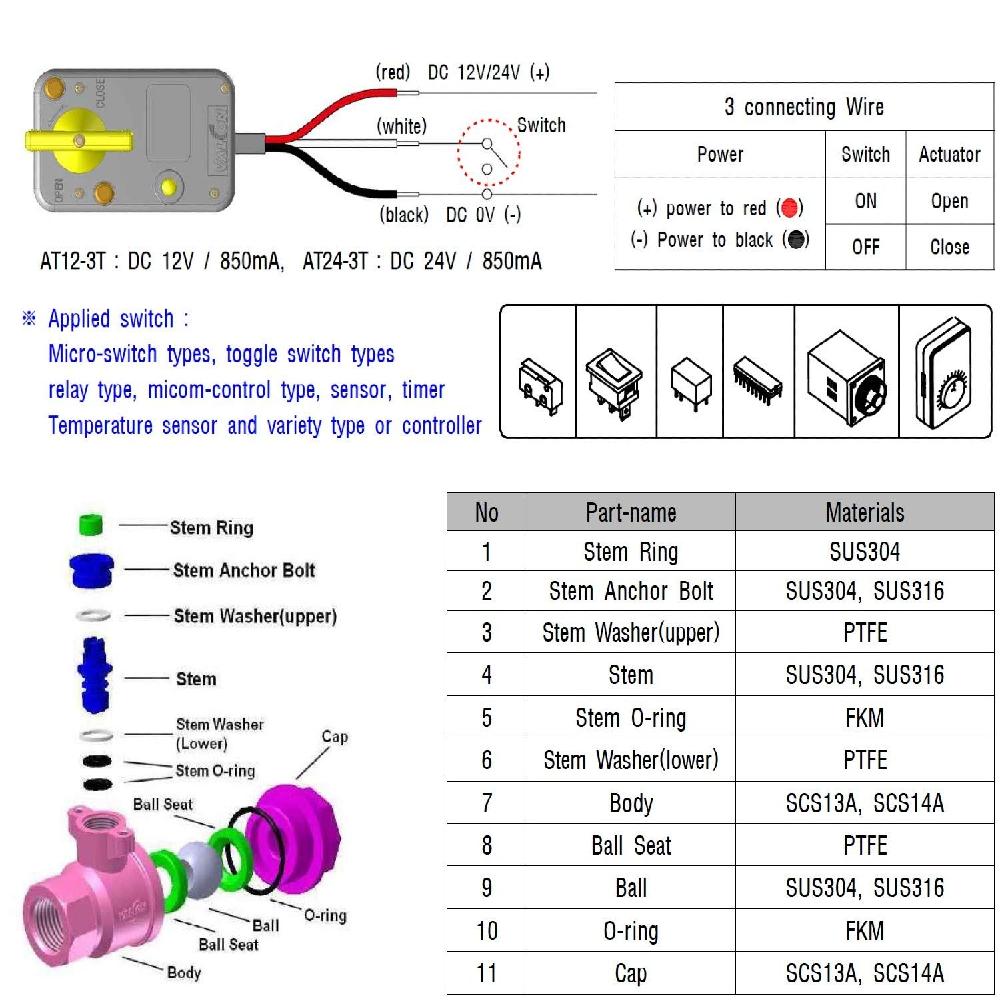
Control: Configuration of Valcon Control System or Connection control signal [Red DC(+), Black(-), White(connection signal wire)]
Power: DC 24V / 850mA
Consumption Power: Approx. 1.2W(in operation)
Max. Output torque: 40Kgf‧cm
Rotation Direction: Opens Counter-clock-wise / Closes clock-wise (TOP VIEW)
Operating time: Approx. 3sec.
Mechanical Life Span: Approx. 100,000 Cycles
Weight: Approx. 250g
Certification: CE, RoHS
Ambient Environment: Indoor with no condensation
Ambient Humidity: 35 ~ 85% RH
Ambient Temperature: 15℃ ∼ 50℃
○2 Ball Valve
Model: VA15A-2S
Application the actuator: AC220-50S, AT Series, A2 Series, AD-S Series
Pipe Diameter: 15 ㎜ (1/2")
Ball bore: 10㎜
End Connections: 1/2" Female PT
Weight : 225g
Max. Operating Temperature: 0℃ ~ 120℃ (32℉ ~ 248℉)
Max. Operating Pressure: 10kgf/㎠
Application Fluid: Non-Corrosive Liquid & Gas
Installation Specifications
1. Compose system that can control by close-operating Red(DC 24V + conductor), black (DC 0V - conductor) / Open-operating Red (DC 24V + conductor), white (DC 0V - conductor) & black (DC 0V - conductor). Do not stick other wires to the red wire (+ pole)
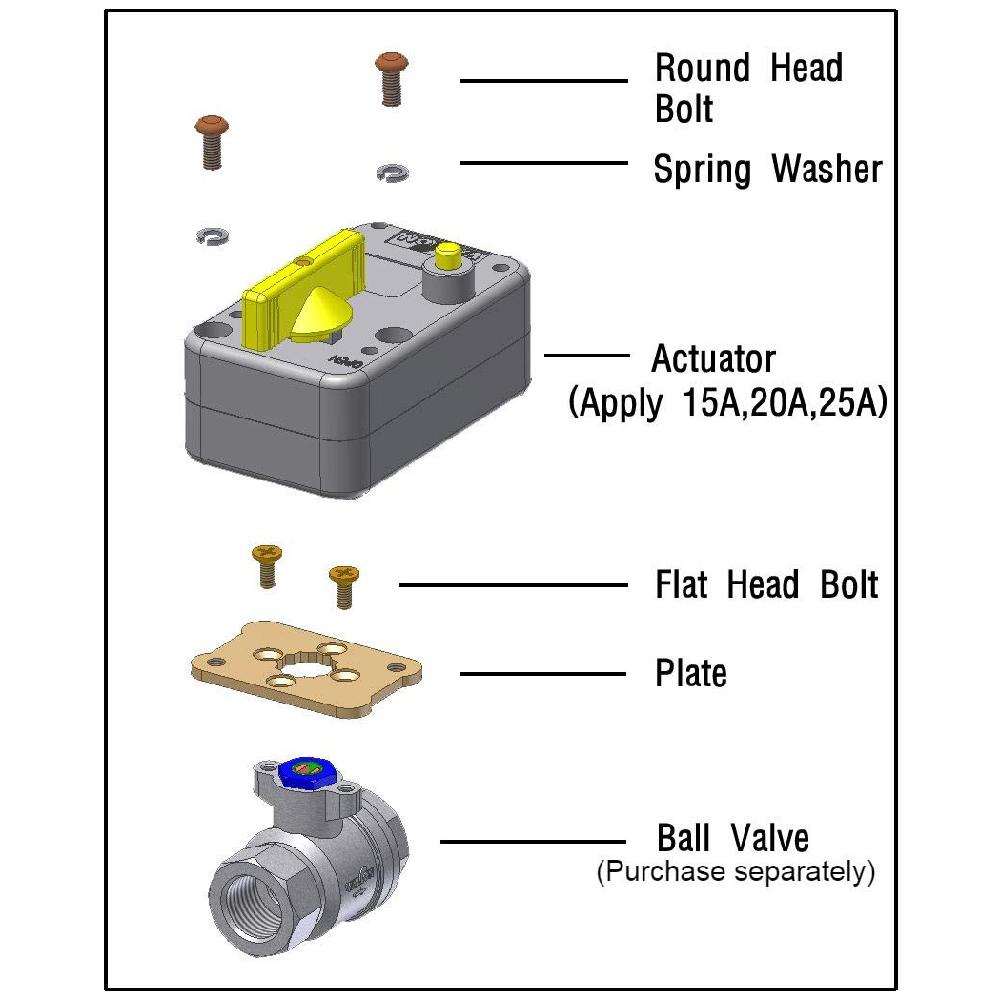
2. Install actuator vertically to valve that is established in piping line
3. Attach the power supply unit with a switch or disconnecting device for emergency power off
4. Connect an overcurrent cut-off device to the power supply for circuit protection
CAUTION
1. Refer to the wiring diagram of the electric actuator for wiring carefully
2. When piping, be careful not to tighten or loosen the valve body and cap
3. When the body side piping, use the octagonal sides of valve body and pipe
4. When the cap side piping, use the octagonal sides of valve cap and pipe